


Scroll through any app store and you will find hundreds of fitness apps promising fast results, guided workouts and personalised plans.
Thousands of people start their fitness goals each year with good intentions, only to lose momentum within weeks. Many people download fitness apps, follow random workouts, or copy routines from the internet, expecting quick results. Others choose to work with a personal trainer for structure, accountability and expert guidance to deliver real transformations.
So, personal trainers vs fitness apps – what really works in 2026? Is technology enough to achieve your fitness goals, or does human guidance make the difference?
The honest answer is that fitness apps can be helpful tools, but they rarely replace the value of real coaching. Apps can track steps, count calories and provide workout ideas. A qualified personal trainer can assess your needs, correct your form, adapt your programme, keep you motivated and help you stay consistent when life gets busy.
If you are comparing personal trainer’s vs fitness apps, this guide explains which option offers is best and how to choose the right option for long-term results.
Personal Trainer vs Fitness Apps - Why This Comparison Is Important in 2026
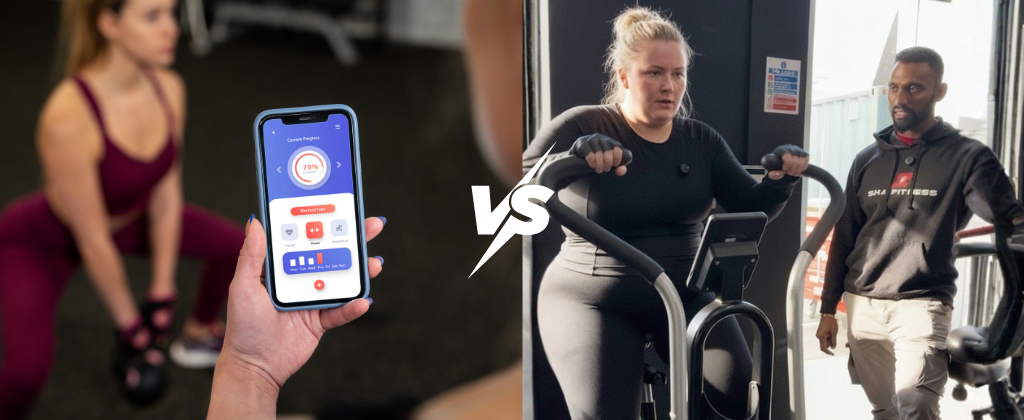
Fitness technology has improved rapidly. Many apps now offer AI-generated plans, wearable device syncing, meal suggestions and on-demand classes. They are convenient, affordable and easy to access.
For sustainable results in 2026, a personal trainer remains the more reliable and results-driven option, especially for individuals with specific goals such as fat loss, strength building, rehabilitation, or lifestyle improvement.
However, convenience does not always equal results.
Many people still struggle with:
• Lack of motivation
• Poor exercise technique
• Programmes that do not suit their body or goals
• Starting strong but giving up early
• Plateaus with no clear next step
• Confusion from too much online advice
That is where personal training continues to stand out. A qualified personal trainer provides structured guidance, adapts to your progress and ensures exercises are performed safely and effectively.
For those serious about achieving specific fitness goals safely and efficiently, personal training remains the more effective choice in 2026.
Understanding Fitness Apps in 2026
Where Fitness Apps Often Fall Short
Fitness apps can be useful when used correctly. Many now include AI-generated workouts, calorie tracking and progress dashboards. They often help with basic structure and routine, but they cannot fully coach a person.
Common Limitations:
1. No Real-Time Form Correction: Poor technique can slow progress and increase injury risk.
2. Generic Recommendations: Many apps rely on standard templates rather than your personal needs.
3. Limited Accountability: Notifications are not the same as someone expecting you to show up.
4. Harder to Stay Consistent: When motivation drops, many users stop using the app altogether.
5. No Human Understanding: Apps cannot fully understand stress, injuries, work schedules, or confidence levels.

The Value of a Personal Trainer in 2026
A personal trainer is a certified fitness professional who designs workouts, tracks your progress, corrects your technique and keeps you accountable, either face-to-face or online.
If your goal is serious fat loss, strength improvement, confidence, or long-term consistency, a personal trainer usually works better than a fitness app.
1. Personalised Training That Evolves with You
A professional trainer designs a programme based on fitness level, lifestyle and health conditions before designing a programme. As progress is made, the plan is adjusted to ensure continuous improvement.
Working with a qualified personal Trainer ensures that every session is purposeful and aligned with measurable outcomes.
2. Correct Technique and Injury Prevention
One of the most overlooked aspects of fitness is proper form. Incorrect technique can lead to injuries or ineffective workouts.
A personal trainer provides immediate feedback, correcting posture and movement to maximise results while reducing risk.
3. Accountability That Drives Consistency
Consistency is the foundation of any successful fitness journey. Having scheduled sessions and professional support keeps you committed and focused.
A trainer keeps you committed, tracks your progress and ensures that sessions are completed with the right intensity. This level of accountability is difficult to replicate through an app.
4. Adaptability and Progress Tracking
As your body changes, your programme should evolve. A personal trainer adjusts your plan regularly to avoid plateaus and maintain steady improvement.
Step-by-Step Guide: Choosing What Works for You
Step 1: Define Your Fitness Goal
Start by identifying what you want to achieve. Is it fat loss, muscle gain, improved fitness, or recovery from an injury?
Apps may support general fitness, but specific goals often require expert guidance.
Step 2: Assess Your Experience Level
Beginners often struggle with form, consistency and programme structure. Intermediate or advanced individuals may still need guidance to overcome plateaus.
• Fitness apps provide instructions but limited feedback
• Personal trainers guide every movement and adjust exercises as needed
For safe and effective progress, guided training is often the better choice.
Step 3: Evaluate Accountability and Health Needs
Individuals with medical conditions or previous injuries should prioritise professional supervision to avoid complications.
Consistency is one of the biggest challenges in fitness.
• Apps rely on self-motivation
• Personal trainers provide scheduled sessions and ongoing support
Having someone monitor your progress significantly improves adherence.
Step 4: Look at Long-Term Results
Short-term convenience should not outweigh long-term success.
• Apps can lose effectiveness once motivation drops
• Personal training builds habits, discipline and routine
Sustainable progress requires a method that adapts and evolves.
Step 5: Compare cost vs value
Fitness apps are more affordable upfront. However, value is measured by results.
• Apps may save money but often lead to slower progress
• Personal training is an investment in faster, more reliable outcomes
When results matter, value becomes more important than cost alone.
What Really Works in 2026?
Making the Right Choice for Your Fitness Goals
The most effective fitness plan is the one you can follow consistently for months, not days.
Technology can support progress, but human coaching drives behaviour change, as apps provide information while professional trainers offer direction, structure, correction and support.
The most effective approach often combines both:
• Use apps for tracking and convenience
• Work with a trainer for structure, guidance and progression
However, if one option must be chosen, personal training consistently delivers real progress, stronger habits, better technique and long-term results across all fitness levels.
Why Personal Trainers Still Outperform Fitness Apps in the UK
A fitness app can count your steps, remind you to drink water and suggest a workout in seconds. It is quick, convenient and often low-cost. But when progress slows, motivation drops, or injuries appear, many people begin asking a more important question: is an app enough, or do I need a real personal trainer?
Technology continues to improve, but human expertise remains unmatched in key areas such as:
• Real-time training and feedback
• Emotional motivation and support
• Adaptability based on physical and mental readiness
Fitness involves behaviour, mindset and consistency, which are best developed through professional personal training.
For individuals across the UK serious about improving their fitness, working with a certified personal trainer remains the most effective solution in 2026.

Start Your Training with Sha Fitness
Sha Fitness is a trusted Personal Training Studio in Chigwell, led by Sharath, a fully insured and CIMSPA-registered Level 3 Certified Personal Trainer. The focus is on delivering one-to-one personal training both in the studio and through online sessions across the UK, ensuring every client receives structured guidance and professional support.
Whether the goal is fat loss, strength development, or improved overall fitness, Sha Fitness provides structured programmes, expert guidance and consistent support to help individuals achieve their fitness goals with an effective training approach.
If the aim is to move beyond generic workouts and need real guidance, working with a Personal Trainer in Chigwell at Sha Fitness is a more effective option in 2026.